
Resin bound vs resin bonded vs block paving vs tarmac
Four driveway surfaces, four very different ways of dealing with rain, weeds and wear. Here's how they compare on cost, looks, lifespan and planning, with real drives laid by our fitters.
Cross-sections, with the layers exaggerated so you can see them. The resin bound panel shows an Infi-Rox drive on a new permeable (SuDS) base; standard block paving and tarmac are shown, not their permeable versions.
Four surfaces, side by side.
All four will give you somewhere to park. Where they differ is what happens to the rain, how they look and feel, what they cost and how long they last. Here's the honest comparison, including the places where resin bound isn't the winner.
| Resin bound | Resin bonded | Block paving | Tarmac | |
|---|---|---|---|---|
| What it is | Stone mixed with resin, then trowelled smooth. 18 mm thick on an Infi-Rox drive | A coat of resin with loose stone scattered into it | Concrete or clay blocks on a sand bed, with sand-filled joints | Hot asphalt, laid and rolled |
| Rain | Drains straight through, when it's laid on a permeable base | Runs off: the resin coat seals the base | Standard blocks: mostly runs off. Permeable blocks are made | Runs off, unless it's a porous asphalt |
| Underfoot | Smooth and seamless. Every stone is held, so none come loose | Textured and grippy, but unbonded stone sheds over time | Firm, with joints. Blocks can sink or rock | Smooth. Can soften and mark in hot weather |
| Weeds | No joints for weeds to grow through | Few, though loose stone traps dirt | Weeds and moss grow in the sand joints | Can push through cracks and edges as it ages |
| Looks | 37 Infi-Rox blends, with borders, bands and inlays | A loose-gravel look | Lots of colours and laying patterns | Mostly black, with a few coloured options |
| New drive | About £120 per m² | Mainly used to resurface an existing base | About £100 per m² | About £90 per m² |
| Over a sound drive | £40–£55 per m², over concrete or tarmac | £30–£45 per m² | No: blocks need their own dug-out base | Overlays are possible; prices vary |
| Lifespan | 18–25 years | Depends on wear: loose stone keeps shedding | 25–40 years | 12–18 years |
| Repairs | Patchable; a new patch can look fresher at first | Worn areas re-coated and re-scattered | Lift and relay single blocks | Patches tend to show |
| Front garden over 5 m² | No planning permission needed when laid permeable | Must drain to a lawn or border, or needs permission | Standard blocks must drain to a lawn or border; permeable blocks are fine | Must drain to a lawn or border, or needs permission |
New drive costs: Checkatrade, "How much does a driveway cost in the UK in 2026?" (materials and labour, ballpark averages, April 2026). Over a sound base and lifespans: Best Builders resin bound driveway guide (August 2026). Planning: Planning Portal (England), GOV.WALES and Northern Ireland council guidance. Infi-Rox figures: Infinity Effects.
The big difference is where the water goes.
Resin bound is the only one of the four that's porous all the way through. The resin coats each stone and glues it to its neighbours at the contact points, but it doesn't fill the gaps between them. Those gaps are how water gets through: around 850 litres per square metre per minute on an Infi-Rox surface, so a cloudburst soaks away instead of sheeting off the drive.
Resin bound on a permeable base
On a new SuDS build-up, the water goes down through the stone, through a bound base course and into an open-graded sub-base, then back into the ground. No puddles to freeze in winter, and no extra load on the drains in a storm.
Resin bonded, standard block paving, tarmac
The rain stays on top and runs to wherever the drive falls: the road, a gully or the edge of the lawn. That's fine if it's designed for it, but it's why these surfaces need drainage planning in a front garden.
Worth knowing: resin bound over existing concrete or tarmac still lets water through the top layer, but the solid base underneath carries it away across the surface. For planning purposes, treat it like an impermeable drive and make sure it falls to a lawn, border or soakaway.
Will you need planning permission?
In England, Wales and Northern Ireland, the rules for front gardens are about rain, not looks. A new or replacement hard surface over 5 m² between the house and the road can go down without permission if it's permeable, or if the water runs off to a lawn or border on your own property. Answer five quick questions to see where your drive stands.
No planning permission needed for the surface
Also check: listed buildings, conservation areas, flats and maisonettes have different rules, and a new dropped kerb needs separate approval from the council. This is a guide, not legal advice: if in doubt, ask your council's planning team before you start.
Sources: Planning Portal, "Paving your front garden" (England); GOV.WALES, "Planning permission: paving your front garden"; Mid and East Antrim Borough Council householder guidance (Northern Ireland).
What will your drive cost?
The biggest swing in price isn't the surface, it's the base. Building a drive from the ground up means digging out, a new sub-base and edging. If you already have sound concrete or tarmac, resin can go straight over it. Pick your size and which job you're pricing.
New drives: Checkatrade, driveway costs per m² (materials and labour, ballpark averages, April 2026). Resurfacing: Best Builders, resin bound over a sound existing base and resin bonded (August 2026). Real quotes depend on access, prep, edging, drainage and where you live.
The good, the bad and the weeding.
Each surface has a job it does best. Here's what owners like about each one, and what tends to bother them a few years in.
Smooth, porous, seamless
- Drains, so no puddles or ice sheets
- No loose stones to kick or track indoors
- No joints for weeds; a brush and a rinse keeps it clean
- UV-stable binder, so it won't yellow
- Needs a sound base and dry weather over 5°C to lay
- Off-limits to cars for 24 hours after laying
Grippy, gravel look
- Cheapest way to refresh a sound drive
- Textured, grippy finish
- Not permeable, so it needs drainage planned
- Stone that doesn't bond sheds over time
- Rougher underfoot
Long-lived, patchable
- Longest typical life of the four
- Single blocks can be lifted and relaid
- Lots of colours and patterns
- Weeds and moss in the joints
- Blocks can sink, rut or rock over time
- Joints need re-sanding after jet washing
Cheap and practical
- Lowest cost for a brand-new drive
- Quick to lay over big areas
- Impermeable, so it needs drainage planned
- Can soften and scuff in hot weather
- Fades and frays at the edges with age
- Limited colours
Out with the old, in with Infi-Rox.
Old block paving, broken slabs, cracked concrete and tired drives are what Infi-Rox most often goes over or replaces. These are real jobs by fitters using Infi-Rox, photographed before and after.
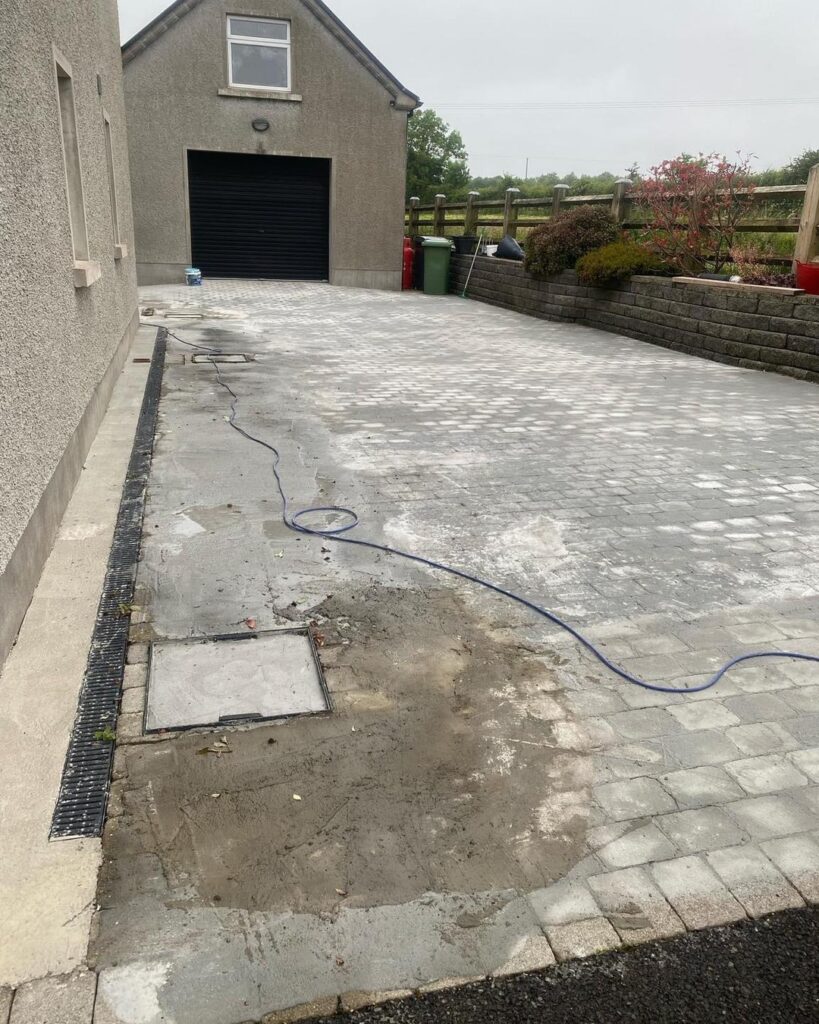
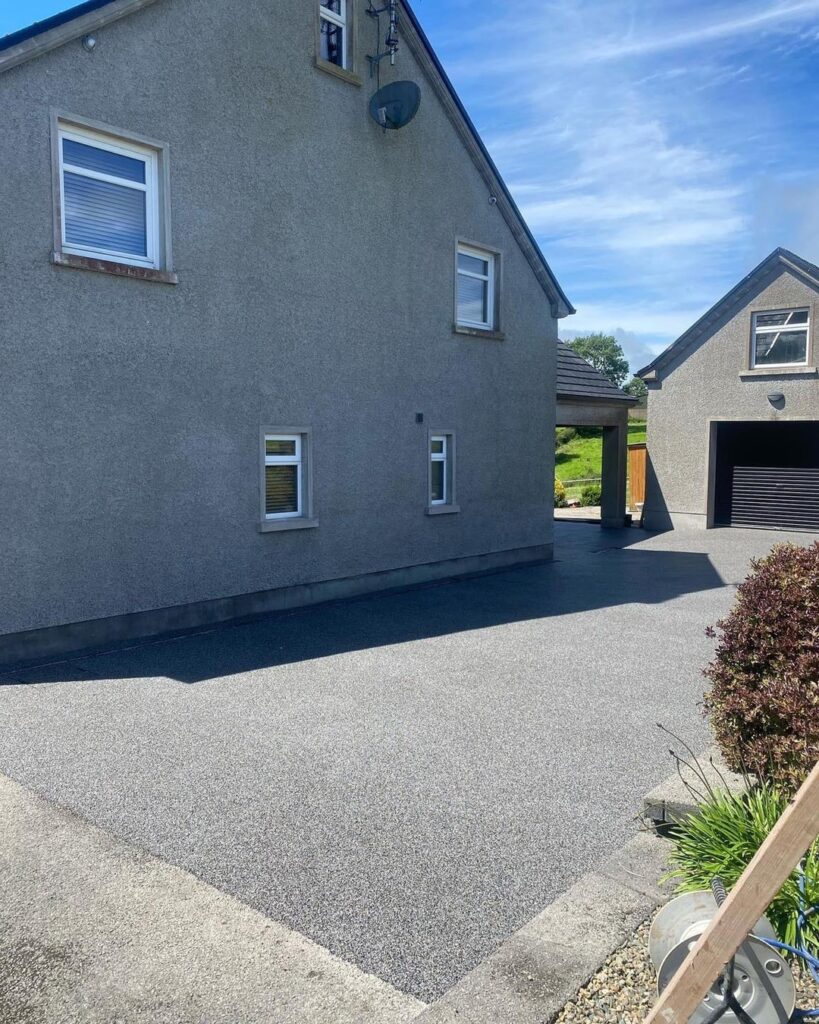
Block paving
Old block paving at the front of the house, and the finished Infi-Rox drive.
Fifty Five ResinsJuly 2022See the job in the Fitters’ Showcase →
An Infi-Rox drive, layer by layer.
Infi-Rox can go over sound concrete or tarmac, or onto a new permeable base built from the sub-soil up. Pick the base to see the build-up. The binders are formulated in-house, and every layer has a product in the system.
Where the rain goes:
Tell us what matters, we'll rank them.
Tick everything that's important to you. Each surface scores on the things it genuinely does well, using the comparison above.
Questions we get asked
What's the difference between resin bound and resin bonded?
Resin bound stone is mixed with the resin before it's laid, then trowelled into a smooth, porous layer (18 mm on an Infi-Rox drive), so every stone is held and water drains through. Resin bonded is a coat of resin spread on the base with loose stone scattered into it. It gives a textured, gravel-like finish, but it isn't permeable and stone that doesn't stick can come loose.
Is resin bound cheaper than block paving or tarmac?
Not for a brand-new drive. Checkatrade's 2026 ballpark is about £120 per m² for resin bound, £100 for block paving and £90 for tarmac. Where sound concrete or tarmac can stay, resin bound can go straight over it for around £40–£55 per m², which avoids the dig-out altogether.
Do I need planning permission for a resin bound driveway?
In England, Wales and Northern Ireland, a front-garden surface over 5 m² doesn't need planning permission if it's permeable or drains to a lawn or border on your property. Resin bound on a new permeable base meets that. Over existing solid concrete or tarmac, the water runs across the old base, so make sure it falls to a permeable area. In Scotland and the Republic of Ireland, check with your council. Listed buildings, conservation areas, flats and dropped kerbs have their own rules.
Can resin bound go over block paving?
Not directly. Block paving moves and its joints can show through, so the blocks are normally lifted first. Infi-Rox build-ups cover sound existing concrete, sound existing tarmac and a new permeable (SuDS) base built from the sub-soil up.
How long before I can drive on a new resin bound drive?
At 20°C you can walk on an Infi-Rox drive after about 8 hours and drive on it after 24 hours. Cold weather slows the cure, so allow longer. It needs to be laid at 5°C or above, on a dry base, with no rain forecast.
How long does a resin bound drive last?
Best Builders puts resin bound at 18–25 years, against 12–18 for tarmac and 25–40 for block paving. The base and the installation matter most, so use a trained installer. The ROX Binder is UV-stable, so it won't yellow, and ROX Rejuvenator can refresh the colour and grip over the years.
Keep reading
All news & guides Spray Granite vs replacing your worktopsSpray Granite or new worktops? Cost, time, mess, finish and warranty compared, with a cost calculator and real before-and-after jobs from our fitters.26 Nov 2026 · 8 min readRead the guide
 R.S.P Polyaspartic vs 2K paint and epoxy resinR.S.P cures in the cold, takes traffic in 6–8 hours and stays colour-true in sunlight. Here’s how it stacks up against 2K paint and epoxy on worktops, floors and decorative pours.26 Nov 2026 · 9 min readRead the guide