R.S Urethane respray prep and troubleshooting
R.S Urethane bonds to almost anything that’s properly prepared. Here’s the prep for each surface, the conditions to spray in, and how to fix bitty finishes, fisheyes, hazing and more.
Clean, keyed, silicone-free: where every respray starts.
R.S Urethane bonds to uPVC, kitchens, timber and metal, but only when the surface is properly cleaned, keyed and dry. Here’s the prep for each surface, the conditions to spray in, and how to fix the faults that show up most.
- 10–25 °Cworking range in our uPVC and metal guides
- 190 micronfilter for every mix
- No siliconeanywhere near the spray area
- Test panelbefore every job
Is today a good day to spray?
Set the temperature to check, and tick the box if the surface is damp or rain is due on outside work.
Our uPVC and metal guides work at 10–25 °C, and the blocking primer goes on from +5 to +30 °C. Temperature, humidity and airflow all change drying and cure times.
Our uPVC and metal guides work at 10–25 °C, and the blocking primer goes on from +5 to +30 °C. Temperature, humidity and airflow all change drying and cure times.
Test panel
Spray a test panel first to confirm the colour, viscosity, settings and finish.
No silicone
Silicone causes fisheyes. Keep silicone cleaners and products out of the spray area.
Air and PPE
Ventilate and control dust, and wear gloves, eye protection and a respirator.
Getting the surface ready to coat.
Pick what you’re respraying.
Take it apart
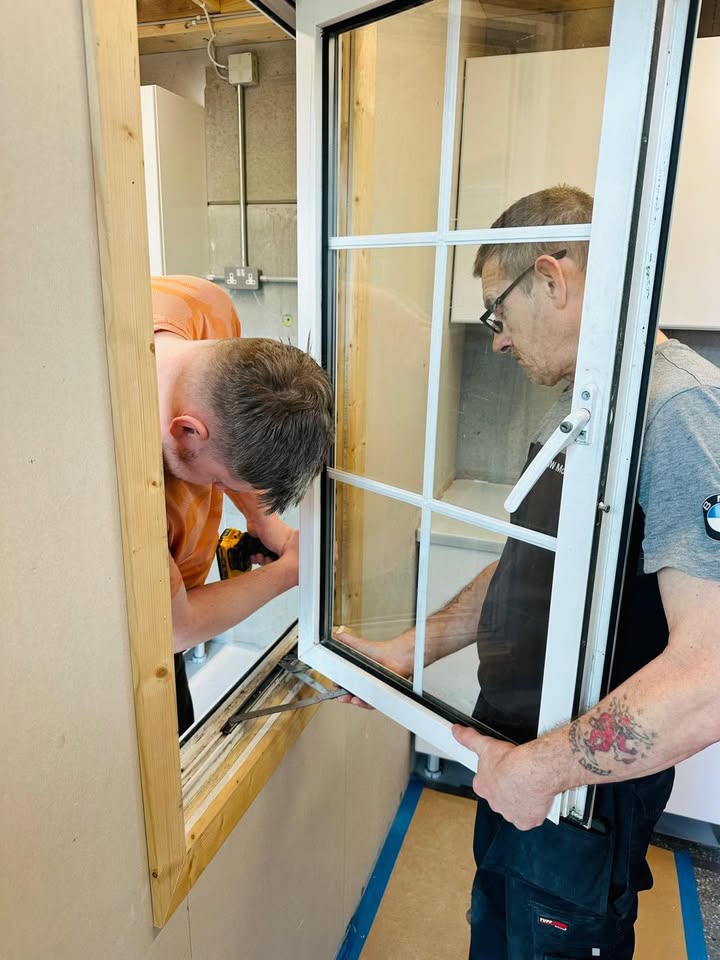
Remove doors, drawer fronts, plinths and removable end panels, plus handles, hinges and shelf pins. Number each door discreetly with its carcass position, and bag and label the hardware.
Clean
Wash with warm water and a degreaser, rinse thoroughly and dry with lint-free microfibre until completely dry.
Vinyl wrap
Sound vinyl-wrapped doors can be resprayed. Remove any failed or lifting vinyl first; a heat gun helps.
Repair and key
Fill damage with MDF or 2-part filler and sand: 120–180 to shape, 220–240 to smooth, 320–400 to finish. Key everything else with 220–400 or Scotchbrite to remove the gloss, then vacuum and tack-cloth.
Inspect
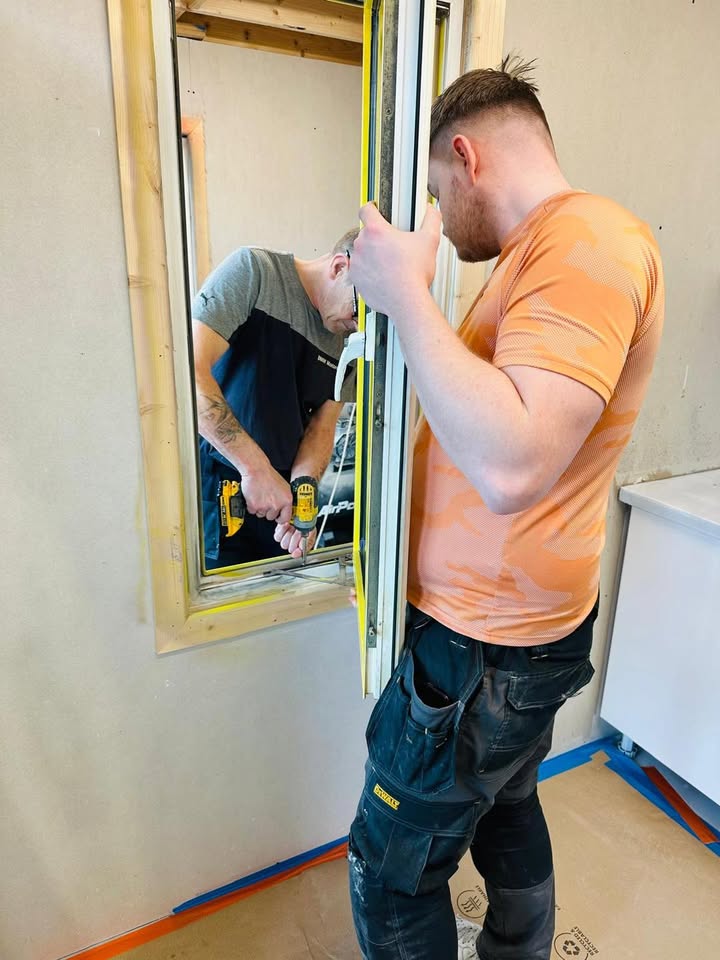
R.S Urethane suits smooth, non-porous uPVC and PVC windows, doors, frames, panels and trims. Check for damage, scratches, dirt, silicone and failed coatings.
Clean
Use a silicone-free cleaner and degreaser, rinse off every trace with clean water, and dry completely.
Key lightly
Sand with 240–400 grit or finer, only where needed. Don’t over-sand uPVC. Wipe off the dust with a damp cloth, then a dry towel.
Promote adhesion
Mist on Fusion Degreaser / Adhesion Promoter, wipe it evenly and let it dry fully.
Mask
Glass, seals, gaskets, hinges, drainage channels and trims, with tape pressed firmly into the profiles.
Painted or varnished timber, or bare timber, MDF, plywood and chipboard.
Key and clean
Key painted or varnished surfaces with 220–400 grit or Scotchbrite, remove all the dust and degrease.
Block what bleeds
Knots, tannins and stains bleed through colour coats. R.S Urethane High Build Blocking Primer stops them.
Porous boards
Bare MDF and timber take about twice as much blocking primer, in two coats. Sand it flat where you want a flat finish.
Aluminium, galvanised steel, zinc and other non-ferrous metalwork, plus powder-coated, painted or bare metal.
Inspect
Look for grease, oil, dirt, oxidation, failed coatings, fabrication residue, damage and moisture.
Clean
Use a suitable metal cleaner, working into corners, edges, profiles and joints. Rinse where needed and dry completely.
Key
Abrade with 220–400 grit or a suitable pad, finishing with a fine abrasive or Scotchbrite. Go easy on edges, and remove all the residue.
Promote adhesion
Mist on Fusion Degreaser / Adhesion Promoter and let it dry fully. Never coat over wet promoter.
Tick these off before you spray.
Something’s not right? Find the fix.
Filter by type, then tap a problem for the likely cause and what to do.
!Bitty or rough finishMixing
The wrong mixing sequence, or material that wasn’t filtered.
Follow the mixing sequence and filter every mix through 190 micron.
Never skip filtration.
!FisheyesContamination
Silicone, oil, grease or residue on the surface.
Find and remove the source, deep clean, sand and recoat.
Keep silicone products out of the spray area.
!Poor adhesion or peelingAdhesion
Poor cleaning or key, contamination, or an unstable coating underneath.
Remove the failed coating, then clean, degrease and key again, with Fusion Degreaser / Adhesion Promoter where needed.
Never coat over grease, loose coatings or failed vinyl.
!Patchy finishApplication
The wrong viscosity, or uneven technique or spray distance.
Keep the viscosity right and use controlled, overlapping passes at a steady distance, speed and angle.
Set up on a test panel first.
!Runs or sagsApplication
Too much material in one go.
Let it cure, correct it, then apply lighter coats with control of distance, speed and delivery.
Build the colour in light coats.
!Whitening or hazingDrying
Recoating too soon.
Allow more drying time between coats.
Wait until each coat is touch dry: 30 minutes at the very least.
!Colour differs between kitsColour
Batch variation across several kits.
Combine and mix the Part A from all the kits before adding Part B.
Plan batch management on any multi-kit job.
!Ragged masking edgesFinishing
Tape badly fitted or badly removed.
Re-mask securely and remove tape carefully.
Press tape firmly into corners and profiles.
!Failure under the coating on metalSubstrate
Oxidation left on, or an unstable surface.
Remove the coating, prepare the metal properly and rebuild the system.
Remove all loose oxidation before coating.
From tired to like new.
Before-and-afters and finished resprays from our fitters.
More in the R.S Urethane guide series
Questions we get asked
Can vinyl-wrapped kitchen doors be resprayed?
Yes, if the vinyl is sound. Remove any failed or lifting vinyl before refinishing.
How much should I sand uPVC?
Lightly, with 240–400 grit or finer, and only where needed. Don’t over-sand uPVC.
When do I need Fusion Degreaser / Adhesion Promoter?
Where required on uPVC, metal and other difficult, low surface-energy surfaces. Mist it on, wipe or distribute it evenly, and let it dry fully before coating.
What temperature can I spray at?
Our uPVC and metal guides work at 10–25 °C. The blocking primer can go on from +5 to +30 °C.
Why is my finish bitty?
Usually the mixing sequence, or unfiltered material. Follow the sequence and filter every mix through 190 micron.
Keep reading
All news & guides One factory, every surface: which Infinity system?Which Infinity system for your project? Pick the surface, from worktops and kitchen doors to floors, walls, driveways, uPVC and furniture, and see the system.26 Nov 2026 · 4 min readRead the guide
 Start a coatings business with InfinityHow to start a coatings business with Infinity Effects: pick your services, train and certify, open a trade account, get found and grow.26 Nov 2026 · 3 min readRead the guide
 How to order from Infinity EffectsHow to order from Infinity Effects: set up your account, build your kit list, check out and choose delivery, with dispatch times and where we ship.26 Nov 2026 · 3 min readRead the guide